


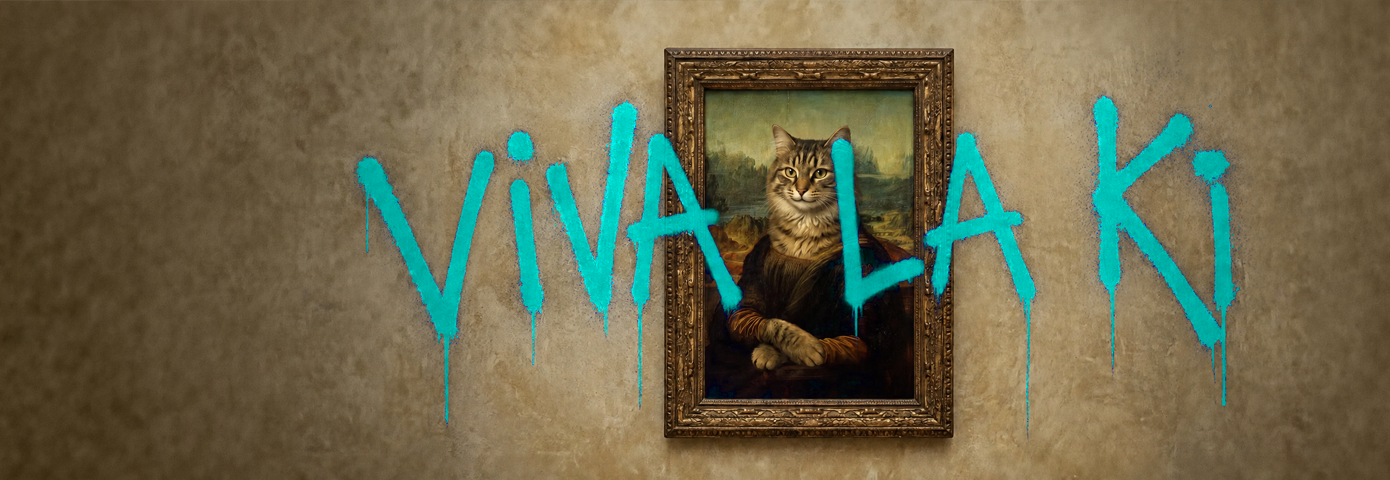
Few topics are dominating the creative industry right now quite like artificial intelligence. New models, features, and possibilities are emerging on an almost daily basis. At the same time, the debate around transparency and the labeling of AI-generated content is intensifying. This is a crucial conversation, but it also highlights just how fundamentally the nature of creative work is transforming.
AI is Part of the Creative Toolkit
Anyone designing today is already working with a wide range of digital tools. Images are retouched, backgrounds extended, colors adjusted, and objects removed. AI simply joins this existing process. It is not a creative end in itself, but rather another tool that unlocks new possibilities and transforms existing workflows. The true creative core, however, remains exactly the same.
Good design isn't about generating as many variations as possible. It comes from the ability to select the right one from countless options. That requires experience, curiosity, an intuition for people and brands, and the courage to make decisions. AI can be a massive help here. It speeds up workflows, takes over repetitive tasks, and brings ideas to life faster. Ultimately, it creates the space for what creativity is truly about.
How AI Transforms the Creative Process
The real shift, therefore, lies not in how we think creatively, but in how we execute. Today, ideas can be visualized much faster; initial concepts can be developed in minutes, and different variations can be compared side-by-side instantly. Research, image creation, and first drafts of copy are becoming far more efficient, freeing up time for the actual creative work.
As a result, our focus is shifting. Less time is spent on repetitive production steps, leaving more time for strategy, conceptualization, storytelling, and creative decision-making. That is exactly where the greatest value is generated. Ultimately, AI doesn’t change the core of creativity. It simply changes the path we take to get there.
Why Creativity is More Important Than Ever
The easier it becomes to produce content, the more critical the ideas behind it become. Today, when almost anyone can generate images, videos, or copy, pure production is no longer the differentiator. What truly matters is the ability to sift through countless options and select the exact one that authentically represents a brand and genuinely connects with people. AI can support, inspire, and accelerate processes. But ultimately, it is still the human who decides which idea wins.
The Labeling Debate Falls Short
The current discourse surrounding the labeling of AI-generated content reveals just how complex this issue has become. Where exactly does an AI-generated image begin? Is it only when a visual is created entirely artificially? Or does it start the moment a background is extended, a subject is isolated, or an object is removed? The lines are increasingly blurring because AI has long been integrated into the tools we creatives use every single day.
We should focus less on whether AI was used, and more on how it was used. Technology can deeply enrich creative processes. But it can just as easily be used to deceive people or break trust. The tool doesn't make that choice; the people wielding it do. Perhaps that is why AI doesn't change creativity itself. It merely changes the way we work. And because of this, human judgment hasn't lost its relevance. In fact, it has become more important than ever.
Responsibility Remains Human
The conversation around artificial intelligence will be with us for a long time to come. The tools will keep evolving, and creative processes will continue to transform. What remains constant is the responsibility to deliver good, meaningful communication.
Creative responsibility stays exactly where it has always been. With humans.
Partners in Growth. Where are you heading next?
Tell us about your goals. We can't wait to hear from you.
FAQ
Does AI replace human creativity?
No. AI is changing the way we do creative work, not creativity itself. It accelerates workflows and takes over repetitive tasks, but the defining idea and the ability to choose the right path from countless options still come from humans.
How exactly does AI change the creative process?
Ideas can be visualized much faster, initial concepts developed in minutes, and variations compared side-by-side instantly. As a result, less time is poured into repetitive production steps and more time goes into strategy, concepting, and storytelling, which is exactly where the greatest added value is generated.
Is AI just another tool?
In a creative context, yes. AI joins a long line of digital tools that creatives already use every day, from retouching and extending backgrounds to erasing unwanted objects. It unlocks new possibilities, but it does not replace creative judgment.
Why does AI make creativity more important, not less?
The easier content is to produce, the less pure production determines quality. The true differentiator becomes the ability to sift through multiple options and select the exact one that authentically represents a brand and genuinely connects with people.
Does AI-generated content need to be labeled?
The debate is important, but it often misses the mark. The boundaries are blurring. At what point does an image count as AI-generated? Only when the visual is entirely artificial, or the moment a background is extended? Instead of just asking if AI was used, the focus should shift to how it is being used.
Does AI-generated content need to be labeled?
Humans do. Tools and processes are constantly evolving, but the responsibility for good, honest communication stays exactly where it has always been.
🇨🇭TRENDBOOK 2026: The 5 Marketing Trends
Marketing is entering a new era.
The media landscape is changing faster than ever. Yesterday's strategies are no longer enough.
This Trendbook gives you the keys to transform this mutation into an opportunity.


